Wednesday, March 16, 2011

Murder A Lawn Today

Dig up your lawn. Go on, I dare you. Do it!

Grab a sharp spade now, get out into the garden and start slicing into that turf. Cut out great big chunks from it, turn the sods over and beat them to bits with a garden fork. Then when the thing is finally eviscerated, thrust the implement of its destruction skywords and call out proudly : "You have taken our Saturday lives.....but you'll never take our Freedom!"

Many of you are now feeling quite uncomfortable - because we’ve been brainwashed over generations,  to the point that even the suggestion of a mild scuff on the turf -  never mind the complete obliteration of your immaculately manicured and pampered squall of grains - is apt to stir a subskin disturbance.

I might as well have suggested juggling kittens or taking a book on the outcome of a toddler fight. Destroying a lawn is such a taboo that shredding it might just generate a thrill akin to streaking - because the received lifelong peer pressure to maintain an al fresco rug manicured to the consistency of snooker beize has been drummed into us for generations.


And it's not just Americans....


I know people who spent a lifetime obsessed with their lawns devoting hours upon hours each week to raking them, spiking them, watering them, fertilising them and finding new ways to stop people walking on them and hounds defiling them. For what?

It started a long time ago. According to Wiki, the word "laune" first pops up in 1540 and is likely to be related to the earlier celtic word which means a grass enclosure as a place of worship. And we've been worshiping the green god ever since.

Our parents start us off with that awe for turf with their: "Hey don't ruin the grass!" thing as we horse around on it. Soon after, that becomes "Hey don't forget to mow the grass!" Even the movies drill it into us - every upstanding 20th/21st century dad ever depicted has to be seen at least once by his picket fence tending his lawn? Lawns have somehow come to represent good family and society values.
Witness Clint Eastwood's gnarly pensioner in Gran Torino pointedly thrusting his cranky push jalopy across his housefront square of vaguely green  - to show his unwelcome new foreign neighbours that he's the one with standards. Is this lawn order?

The person who sends me the pic of the best ruined lawn wins Clint Eastwood's mower from Gran Torino (pictured above after his character's passing)

The growing swarm of publicly placed "Keep off the Grass" signs warn kids off having fun on underfoot public space everywhere (gambol on the pavement only!!). And was it the General's (an Irish gangster of notoriety) digging up of the Gardai's (Irish cops) golfing turf at a South Dublin club that finally fired up the fuzz enough to snuff out his wayward career?

We shrugged when Mr G nailed people to floors but we were sincerely shocked when he sliced up a putting green.

The General....Dublin's best known criminal: done in after attacking a police grass


I've just destroyed the ridiculously small patch in my back garden. The front will survive for now only because it's reverted to moss and nothing else will grow there. But gravel is  planned.
Here are the reasons to murder the grass:
1. A Lawn equals a lifetime of mower-bound servitude

You will spend between one and two months of waking hours of your life mowing it, that’s more than the 21 minutes per week you’ll average having sex over your lifetime (according to Paul Bloom, author of “How Pleasure Works.”


Turf or sex? A frustrated lawn widow yesterday


2 Lawns ruin the environment.

Completely dispelling the notion that urban "green" spaces help counteract greenhouse gas emissions by locking in carbons in the way trees do, research published last year as part of a survey assisted by the US Department of Agriculture demonstrated that total carbon emissions would be far lower if lawns did not exist.
The study by University of California Irvine showed that nitrous oxide emissions from lawns were comparable to those found in agricultural farms, which are among the largest emitters of nitrous oxide globally. Nitrous oxide is a greenhouse gas which is 300% more damaging than carbon dioxide.
Another American study showed that a petrol lawnmower using a two stroke engine releases more carbon emissions in an hour than a new car running for 340 miles. In the USA the Environmental Protection Agency estimated that Americans use 800 million gallons of petrol per year mowing their lawns. Interestingly the clutzes also spill another 17m gallons per year filling up the mower - more than the Exxdon Valdez spilled off Alaska.
Lawns require constant additions of toxic chemicals to keep the weeds down through the growing season and are also supplemented by bought artificial fertilisers.


Your lawn burns fossil fuels


3. Lawns waste a whole lot of water.

In the middle of a drought when we need to conserve water most, what's that sound in the middle of the night? That's your neighbour hosing down his lawn.  Water shortages are brought on by millions of people simultaneously hosing down their lawns once the grass starts to yellow.

4 Lawns Cost You Cash

Keeping that grass costs you about E125 per annum if you have a small urban lawn, front and back. That's a new lawnmower at E200 - replaced every four years equals E50 a year. Then you’re looking at E25 apiece per annum for weedkiller, fertiliser and then petrol to run the mower. That's not including the massive metered water charge you’ll receive once water charges begin.

5.Lawns Create Refuse Problems

As we all know, bags of grass cuttings clog up your composter with slabs of slimy guck which refuse to break down. So unless you can balance it out in the composter with woody wastes, you've got to dump it somewhere in the garden causing a slimy acidic mess somewhere else. Otherwise it goes in your bin which you pay to have taken away.

6.Lawns Are No Use WhatsoeverTo Nature

Plants (grasses) which are never allowed flower by virtue of being cropped off once a week and having all other plants removed are no use for birds or bees and make life more difficult for them.


A mole taking my advice yesterday


 7. You Can Make Better Use of the Space

Perhaps most beneficially of all, you can use the space for vegetable patches or raised beds to grow healthy food for your table. In a small garden, the time you put into getting your mower out of the garage, setting it up, cutting your grass and distributing the cuttings will go a long way towards tending a few patches of carrots, spuds and salads for your table. Use the space to provide healthy food for your family and save your self money rather than spend it.

8. We've Enough Green In Ireland

Football pitches and parkland are already everywhere in a land wher it rains all the time, so we've enough grass around the place without fencing some off some more and obsessing over it. In truth, once they’re over four your children won’t use the garden to play, back or front. And even for the littlies, gravel is quite safe. So get out there and rip it up. Save money, save the earth, save your valuable time, make yourself genuinely useful and go kill a lawn today.


Way too much! - Ireland from space showing (in green) where all the lawns are ..and..

A projected mock up from space showing how it might look (much warmer) with most of its lawns destroyed. Do your bit and Dig for Victory!!

Monday, March 14, 2011

Driven Up The Walls

Farming as it’s currently done - outside in the fields and with muck and tractors - is for numpties. Apparently. Yes indeed, it seems ye olde method is no longer plausible because of soil exhaustion, chemical contamination, weather disaster and population pressure. Instead think farming in high rise city blocks as the only viable way of making healthy clean food for the future.

So says Professor Dixon Despommier of Columbia University USA who is world renowned for his concept of the urban vertical farm - a high rise building of thirty floors or more with a footprint of five acres. His city situated behemoth of glass, steel, salads and chickens, would use aquaponics and aeroponics - processes of growing plants without soil. In order to feed a city like New York and you’d need 150 of these buildings to feed that city.

Despommier with some food he grew earlier in that tower behind him
And of course the architects absolutely love this stuff. Not surprising then that since Despommier came out with “The Vertical Farm” thesis in 1999, that every turtlenecked architechie in possession of a 2B propelling pencil -  has taken a bash at sketching out some sci fi vertical upright gardening structure or other -  whether a full blown vertical farm like Vincent Balle’s concept Dragonfly Farm building for New York or (at the lower end of the pecking order), a “living wall” tacked on to a regular municipal building or other.

Balle's Dragon Fly Farm for New York - I don't think this one will fly somehow
Recently they’ve even built a whole series of stand alone “living walls” in the poorest part of Los Angeles, designed produce fine upstanding tomatoes, onions, chillies and cucumbers - cut and come for the impoverished so to speak. Ye see apart from the commendable idealism, the problem with allowing architects and structural designers to tangle with gardening stuff is that they view plants as just another material or texture rather than individual living things with their own very particular needs.


For this reason, most of their living walls will fail - by producing stunted plants with diseases. Onions and carrots can’t grow in the same homogenous upended giant seed tray. Amateur food growers know what architects and designers of novelty wall mounted growing systems don’t - you can’t bung a bunch of onions, tomatoes and chillies into one great big tight knit vertical patchwork quilt and expect to walk back to perpendicular cornucopia.


A dead living wall in London's Islington
As it happens I’m out in my back garden now musing about the nutty upright growing device designs I’ve seen on the internet over the last few days. And I’ve just come up with my own - the lettuce gutter.


I’ve just taken delivery of a massive 16 foot by ten foot and eight foot high shed which has robbed me of about a third of my total garden growing space. There’s a big chunky rain gutter on the front side which takes all the rain water from the roof to the side of the shed, down a drainpipe to the side.


My brainstorm involves bunging up the hole to the downpipe, filling the gutter with soil and growing lettyce in it. If my roof gutter can grow weeds and small trees, then why can’t my shed gutter grow rocket and mustard? The rain would therefore trickle down to give the salad a drink. So hey presto let’s tell the architects!!


A lettuce gutter yesterday - looks like someone's beaten me to it!
But as I've said, hairbrained upright growing schemes like this one - alongside those peddled by bampot designers online -  generally don’t work. Otherwise the lettuce gutter would have been patented by now, we’d all be climbing ladders on summer weekends to pick salad and I’d be rich instead of working for the Sunday Times.


But with my greatly reduced backyard, I’m now facing the conundrum that many city dwellers face when trying to grow a bit of produce  -  a tight ground area and lots of upright vertical space crying out for an idea.


So this is what I’m actually going to do. 


First, tomatoes - the best crop ever for growing up (or down) walls. They don’t require a massive rootball and can be trimmed, trained, wired or strung in all directions - best of all - upwards. Next up strawberries. I have loads of strawberry plants sitting around in window boxes and buckets which are set to make their big  splash around May. 


These I plan to suspend in a hanging gro-bag formation from at least one wall of either the shed or the house. Strawberries flower, fruit and then get in the way for the rest of the year. So the removable gro-bags will allow me to shift them into the dark side passage once the fruit goes and they start firing out those annoying runners.


Next, the grapevine. I have one in the corner of the patio but unfortunately the tomatoes shade it out. This will henceforth be situated at the sunny corner of this new shed, and will be trained out along the shed gutter thus turning it into a far more practical and productive aid to the larder than filling it with lettuces.


They're grape for climbing - a vine scales a shed
I am aware of peas and beans as a viable upright option but peas yield very little for all their handsome growth and while beans bring more food, I can’t stomach them. If you're partial to beans they climb exceptionally well - some to eight or nine feet up.


Next will be two shed hugging cucumber plants. These won’t be allowed out of the greenhouse until May or they’ll die in the weather, but I do have two or three salvaged and still loving rose bush stumps and rootballs in plastic bags and these will also be trained on the shed for colour but also for support - for the cucumbers. Once fed properly and provided with something to climb cucumbers will quickly swarm up a (sunny) wall and are highly productive. We don’t eat a lot of cucumbers so there will only be two.


Finally - last but not least I’ll be planting a damson tree that’s been sat dormant in a bucket on the patio since I purchased it in the autumn. Although it’s a tree with root capacity to undermine my shed foundations, I’ll be confining it to a big container and then training it along a wall with wire - making its branches perpendicular to the trunk in a well tested style which will yield buckets of fruit.


Small fruit trees are perfect along walls - they can be grown as high as you want and then cut off top and trained outwards. Try the container viable Irish bred Coronet mini apple tree which stays at four or five feet or try to find a small pear strain. Always beware though of the capacity of tree roots to do damage to walls though.


An esplanaded pear tree against a wall
From the top down, hanging baskets or containers will also do well for strawberries and cherry tomatoes (try tumbling tom). Make sure there’s clay in the mix to retain moisture so you don’t end up having to water them twice a day. So there you have it, a few tips for growing food vertically which aren’t off the wall. Until you hear about my potato chimney pots that is..

Thursday, March 3, 2011

Shady Characters (what dope growers can teach us)

How many food growers have researched something on the internet, got interested, and then found it related to dope growing?

Two years ago a Wexford farmer's wife returned to her car in Ferns village to find two suitcases brim-full of marijuana in her boot. Two Chinese men at the scene apologised to her for placing their suitcases in the wrong car (they'd been instructed to stick them in the next car up) The gardai (Irish cops) were called and they tracked the suspects to two houses stuffed floor-to-ceiling with E400,000 worth of wacky baccy plants.


Don't trust those drug dealers with your car...

This was one of dozens of busts which have taken place here since 2008, highlighting Ireland’s other "grow your own" boom. Hot housers can produce E100,000 worth of crops every few months from an area the same size of my allotment and back garden (which in contrast make me about E1,200 per year worth of food, though nothing stronger than wild garlic and cayenne chillies.

The secret to the pot houser's success - and also to his downfall  - is the 1000 watt grow lamp bulb which gives the cannabis plants the equivalent of twenty four hour blazing sunshine if they so need it. They also bring “heat” on the growers because infrared cameras on police helicopters or the resulting electricity bill spikes are what generally leads to the hot house bust.


Em....hello!!

But perhaps no one understands the optimum application of light to plants than illicit dope growers who could teach us food growers a thing or three about maximising photosynthesis - the process whereby plants make oxygen and sugar from light, carbon dioxide and water.

Last week I was inspecting some very wacky looking cabbage plants in raised beds that I installed late last year in the side passage of my semi d. The passage, used for channelling wheelie bins in and out, provided me with some excellent extra raised bed space along its permimeter but it gets no more than two hours of direct sunlight daily. Food plants need a minimum of six to do their thing.


Not as interesting as my side passage, but just as dark..watch out for the Ripper..

My first step to testing the growing potential for a darker area like this was to stick in a bunch of partial shade tolerant food plants. In went spinach beet, sugar snaps, cabbages and a blackcurrant bush. All did well apart from the cabbages which stretched eerily skyward in search of light and formed no heads at all. So cabbages, and presumably other brassicas like sprouts, broccoli, calabrese and cauliflower won’t work here but sugar snaps and by assocatiation, other legumes like peas and beans, should.

I learned from a Youtube clip, that blackcurrants grow wild in woods and forests and are among the few fruits that can cope with shade or at least dappled sunshine. Mine did fine in two hours of direct sun but would surely have exploded with fruit were it devoid of shade.

Using shaded space is about wastage limitation and most food plots have partially shaded areas where the sun falls only for four or five hours a day. Some have heavy shade like my side passage, where the sun hardly falls at all. Knowing what to do with these spaces is vital to get the most from your ground overall.

"What? What did he say?" - Some blackcurrants in the dark yesterday...

Some plants like chillies, aubergines, tomatoes and squashes need more than the minimum six hours of sunshine to do well. Others, like those mentioned above, will produce a reduced amount of food but some food nonetheless. Very few, if any at all, will do well in almost complete shade with less than four hours direct sunlight. Only mushrooms and forced rhubarb can grow in the dark.

The general rule of thumb it seems is that fruits and roots need full sun while those harvested for leaves, buds and stalks can get by with less than the recommended six hours. Good prospects for partial shade (four to six hours) include lettuce, brassicas (in particular cauliflower and broccoli/calabrese), peas, beans, chard, fennell, Jerusalem artichokes, cabbages , mint, kohlrabi, spinach and parsley

Darkest jungle...forget lettuce/salad...but do check your pants for outsized centipedes

Those which can apparently cope best of all with the very darkest environs include parsley, chard, spear mint (do contain the roots though) and some darker leaf lettuces.

To increase the level of light in certain areas, we can take some tips from the cannabis growers. They cover their walls in reflective foil so that they get the best exposure for their light sources. Similarly you could surround your plants with reflective surfaces to channel in more light, but a  more practical measure is to paint the walls and paths around then in white. White paint in a sunny patio area will also vamp up the light for high light consumers like tomatoes by creating a "sun trap."

In areas where you have deciduous trees it might be an idea to concentrate your efforts on a winter cabbage or broccoli because of course, for many months of the year, the trees won't have any leaves at all and the light will filter through.


In the dark: "I swear, I saw a lettuce just there..."

The opposite also applies. When planting in Spring be aware of  the potential for increased foliage on trees and shrubs later in the year. I planted Swedes in a raised bed which backed onto my garden fence containing a jasmine and a rose tree. At the height of summer, these generated an overhead canopy of shade which prevented light getting to the swedes at the back of the bed at certain times of the day. The result was healthy big swedes to the front(where the sun hit first) receding in smaller plants to the back (where the sun hit last). As the year went on, the plants at the front grew taller and in turn succeeded in further shading the ones at the back.

Healthy Swedes to the front...

No one spot in your garden gets exactly the same light level as another. Even in the same bed, the sun will always reach some plants before it gets to others. In extreme cases with bushy topped plants like Swedes, you may have to consider staggered planting to give those plants most in the shade a head start to prevent their fellows growing quicker and shading them out.
Ideally we should keep all roots like carrots and swedes well away from walls and fences. Use netting for your allotment boundary rather than solid fencing  which casts a shadow.

In the future we may all end up with grow lights in our gardens for darker months of the year thanks to new technology. NASA has applied LED technology to plant lighting and this more energy efficient technology is already finding its way into private greenhouses.
LED’s use more than less than half the power required for standard growlights by producing only the light spectrum necessary for plant growth - in this case a red and blue combination. This also means less heat and as it happens, bulbs which can last for many years.


Blue and red LED on Cannabis (sue me for copyright on the photo i dare you...te he)

As technology develops it should mean more growing opportunities for gardens in the northern hemisphere, as well as less drug busts - because not surprisingly our cannabis hot housers are already up to speed with LED.
 

Thursday, February 17, 2011

I’m No Alan Titchmarsh.. but he is...

Recently I waxed hysterical about the failings of your common and garden garden centre/DIY barn. I moaned about rip off prices and staff who know nothing about plants and seeds.

Indeed handling of plants and produce at big barn stores is so poor that Thompson and Morgan, a leading quality seed company actually goes so far as to ban the sale of its seeds at big barns.

Polite and cheery though they might be, big barn staff know almost nothing about the plants they sell - sometimes to the extent that they've already killed those on display, as trays of withered strands will show.

We need someone to sort it out.


He might be dangerous!

And while I've got five years with an allotment under my belt, I'm certainly no Alan Titchmarsh. So I thought I'd ring Alan Titchmarsh to find out what he’s doing about it.

Well in truth, B&Q rang me because I was invecting forth about the evils of DIY barns. They told me they'd  recruited Mr T himself to come on board and help them solve their own staff knowledge issues. Would I like to talk to Alan about it? Yes Please.

Mr T says:  "Yes, I have been visiting their centres, meeting staff and I've made some training videos which are going to be shown to the staff in all B&Q outlets in the months ahead. It’s important that plants are in the best health they can be for the customers and that staff know what’s what," said Alan on the phone.

What’s more, Alan’s “top tips” will be posted up for the benefit of customers at B&Q as well (me doing my bit to get the B&Q message out).

As a Kew college trained plantsman and the face of British gardening television for almost three decades, the Titch can afford to rest on his laurels. He's not just a tv presenter, he genuinely knows his plants. But I've also been warned that he is absolutely notorious for being nice. So not surprisingly I can't get him to say anything bad about Garden Centres. He does agree however that there are knowledge issues with staff.

His recruitment is of course a coup for B&Q because people do love listening to Alan... especially women.

Last year it was reported that Madame Tussauds clean the face of its Alan Titchmarsh waxwork at least once every two weeks because of lipstick smears. They say Alan is their "most groped" waxwork
.
For one thing, I need to find out where he buys his seeds. In a garden centre or DIY barn?
"Well I buy them all over really, wherever I can get them and I like to save a few of my own. But mostly I'm a catalogue man at heart. I have one sent out each year and I love browsing through it." And he orders from Chiltern. "Aha!"

Mr T working on a schools gardening campaign

I'm delighted to learn this because after Irish Seedsavers, I’m planning to order the remainder of my seeds online. I’ve heard Chiltern are the best and this is corroborated by a Which? survey some years ago which also showed poor performances from the seeds produced by many of the household names.
Alan thinks he knows what the problem is: "The thing is this - most seeds from the better known companies are perfect when they go into the packet. Seeds want to grow, and will often grow despite our efforts.

"Usually people are the reason when they don't. The problem is that they're often not stored at the right conditions at the shops. Seed displays need to be kept cool, dry and out of direct sunlight. Nothing does for a packet of seeds like being left in the sun. So when you buy seeds from a shop or a garden centre, always look at where the display is located and then ask yourself whether you think they're being kept in the right place."


But still the Mr T we all know and trust
Of course the other problem we Irish have with seeds is that almost all the seeds we buy are from British names and because the UK has different soils and weather conditions to Ireland's and for the most part, is generally a bit warmer, the instructions are skewed.

"I know how you feel because in fact we used to have the same problem in Yorkshire. My Mam always used to say "add a month" to the sowing schedule for Yorkshire. So it's not just a problem in Ireland. Climates and conditions are different all over. You've got to get a feel for what's right in your area and go with it. You’ll get it right eventually by trial and error."

And what about the price of seeds these days Alan? Big barns like your mates at B&Q have been banging up the price of them like nobody's business - especially since the GIY zeitgeist took off. Where I paid two quid for a packet of Nantes carrot seed when I started this allotment mullarkey, now I'm paying closer to four.

But there’s just no way of cranking a good old moan out of the ever chipper Mr T who calls on me to quit my jibber jabber.

"Aw come on Mark, seeds are still the best value you can get. Compare a packet of seeds to a litre of petrol and ask yourself what's good value? You get a whole season of interest and so much good food at the end of the year for your couple of quid. You won't find better value for money than a packet of seeds."
What I also knew about the big Al, was that during his years on Gardener's World, he did all his presenting from his own garden, not the Beeb's garden. And because I'm no Alan Titchmarsh, I'm not about to compare his patch to mine.

But I can't resist trying to find out if he's got anything growing at this slow time of year. "What's going on in your food garden at the moment then Alan?
"Well do you know that in all my years gardening I never once grew asparagus. And a few years ago I decided to give it a go. So last year for the very first time I've been harvesting my own spears. It's absolutely magic stuff and I'm really glad I tried it. I've got leeks on the go as well. I've got three small key patches which I like to work on.

As well as his own asparagus, late last year also saw him launch Titchmarsh launch a sort of autobiography about his youth in the 1950's. Called "When I Was A Nipper." This follows similarly themed books relating life in 1950's Britain, namely "Nobbut a Lad" and his full biography "Trowel and Error." In recent years he’s also become a novelist and hosted his own chatshow.

He had a ball of a childhood in Ilkley and reckons that people were both positive and resourceful in the fifties despite the tight belts.


The lads - Big Al and Little Al.

"You never want to go backwards, but sometimes I think people who are new to gardening these days expect to get everything right all at once and are disappointed when they don't. Of course you've got to work at it and keep trying. And with food growing so popular at the moment it's great to see so many people getting out and giving it a go. These days you can grow far more varieties than ever. So it's all good. It’s all good."

I was told I had fifteen minutes with Mr T, I had a half hour's worth of questions, he's answered them all and I have nothing left to ask. Em, thanks Alan.

What a professional.

He’s even got me feeling all positive already...What can you say? Whatever he does he wins. Even the cynic gives way. Top plantsman Mr T always.

Sunday, February 13, 2011

Recyle and Keep Out of the Garden Centre

Two weeks before Christmas, this particular Santa Claus found himself running hither and tither, criss crossing with other Santas -  all of us on a frantic last minute scramble to bag that one elusive item. Top of this Santa's hit list was a Sims 3 for Nintendo DS, a game which allows your child to sit on the sofa all day and live in a virtual world. As numero uno on my eight year old lad's letter to Santa, Sims 3 was a must get.

Santa's Sims hunt very quickly determined that not only were stocks cleared out of Sims at the really big toy stores, but also at the middle and small sized ones. The specialist game stores were also devoid of Sims. With worn shoe leather and a heavy heart, some facts began to dawn on Santa.

First: Those elves who run computer game counters are not very good at their jobs. How else could every single one of the world's five top favourite computer games be out of stock a full two weeks before Christmas? Santa also learned that he harboured a rather pressing urge to alter the geeky, smug countenances of these elves...perhaps with a wheel brace.


The SIMs - where are they when you need them?

- "Sims 3? Ha ha! That was like, SO out stock even FOUR weeks ago!! Ha ha."
-"Art Academy?"
-"THREE weeks ago ha ha."
-"Latest Mario?" "Ha ha, just last week."
-"I want to kill you."
-"Excuse me?"
-"You're out of every single one of the five most popular games for the busiest two weeks of the year - your shop loses out because you didn’t order enough stock! What are you so pleased about?”
-"Yea, so? Anything else?"
-“I’m going to make you eat that "shit happens" t-shirt."
-"Excuse me?"
-"Nothing thanks."


The greater spotted game counter elves...hopeless at Christmas


Santa finally bagged his Sims 3 at a video rental shop which also sells some games and obviously where no one else had already thought of looking. But it was a close shave.
While their elves are generally much nicer, the other big offenders for being regularly out of stock “in season” are the DIY barns and garden centres. During tomato staking last year, the local big barn was out of bamboo poles so I grabbed eight non priced plastic coated metal poles - they came to sixty quid at the till.


"How Much?!!!! Are You Guys For Real?"

They’re also hugely expensive - sometimes horrifically so. My own favourite price shocker from a DIY barn chain was eighty quid sought for four planks with grooves cut in them - marketed as a slot-together raised bed. Ahem.

While they're ok for emergency buys, if you do insist on buying all your garden supplies at the Garden Centres and DIY barns,  your food growing efforts will cost you more money than you'll save. Also, when you turn up to buy something that’s out of stock you’ll inevitably end up spending more on something else you don’t need purely by being there and getting tempted by what's on display. What's more - DIY barn staff, particularly those in the garden section,  are notoriously devoid of plant and garden knowledge. Ask them for advice on what plant or product you need and you'll not only spend a fortune, but you'll end up spending it on the wrong thing altogether!!

 It works like this: Buy a plastic bucket in a supermarket and it costs five quid. Stick it in a garden centre or DIY barn and call it a "planter" and now it costs thirty. For this reason, I never, ever buy large plastic planters at DIY barns. Instead I beg, use and reuse large catering size mayonnaise and coleslaw buckets. Paint them up if you want them to look better.


A mayonaise bucket yesterday


Plants from barns are also hugely expensive. Expect to pay so much for some that they're just not economical. Three quid for a strawberry plant that night grow a quid's worth in it's lifetime is not an unusual offer of theirs. But even if you're growing from seed you'll still get ripped off.

I used to buy my seeds from barns and garden centres but somehow they've doubled the prices over a three year period - cashing in on the "grow your own" boom. Now the thing is this, seeds are great value even at that price, but you can still do much better than get ripped off at the barn where you'll end up overspending by twenty or thirty quid if you're buying twenty packets in a season, as I might do.

These days I grow absolutely everything from seed and I'll only buy the very occasional mature plant. And because a lot of my plants last year were heritage varieties, I can also reuse my own saved seeds every year for free. My remaining seed needs will be sated from the internet - not only are online seeds half as cheap, but a Which? survey in the UK some years ago showed that those from well established providers were of a far higher quality than shop bought stocks.

Spring is the time of year when I get stuck into just the sort of heavy recycling that keeps me from the clutches of the barn in the months ahead. Down come the old tomato canes and cucumber frames. They get a good cleaning and are put in the shed to dry off. The wire twists that held the vines and other taller plants to the poles are all unravelled and stored away for reuse. And those twisty ties that come with children's toys and make liberating Buzz Lightyear from his box on an exercise in heavy engineering on Christmas morning, are also saved up for the same use.

All of last year's white plastic pointed plant labels are gathered and boiled in water and bleach to remove the old indelible ink writing, readying them to be reused again. Plastic flower pots are cleaned and stacked.


Toy ties - they Keep Buzz in his box but are also perfect for tying up Woody plants


The timber you will use for staking and building raised beds, also costs a fortune at the barn, so I save all the timber scraps I find. I've even made good on the property crash by building raised beds out of redundant scaffolding planks. The thicker woody prunings that I take from the garden and allotment at this time of year are also trimmed down, stored and used later in the year for pea supports. The insides of toilet rolls are kept for bio degradable seed pots, particularly for sweet corn seeds and their resulting sprouts. Compost making will also save you cash and so I compost everything, newspapers included.
My dismantling of a ten year old timber garden shed late last year to make room for a metal office/shed presented a dilemma when no one wanted the old one. I've since sawn it up and stored the floor panels to reuse as raised bed supports. But lacking the space to save the rest, I’ve had to hire a skip -  because you should remember that disposing of things you can’t recycle costs you as well. Knackered garden furniture and planters are to be found in almost every skip.

Now I have to fend off another type of Santa Claus - spring cleaning skip haunters who visit clandestinely to deposit their own “presents.”
Indeed a family member known for his feverish recycling of timber for the domestic fire came around and took a few choice sticks from the skip. But then he subsequently offloaded an old acid filled car battery into it!!! That’s the sort of recycling I can do without.


Not recylable!!! A SIM tries to dump an old car battery on a family member

Sunday, February 6, 2011

Why My Dad Can't Have A Flamethrower (and the Plot 34 Guide to Weeds)

I thought I’d heard him right. “You want to buy a what?” I did hear him right!!

What do you do dear reader if your pension age dad -  master of showing up with cuts, grazes and fingers like an elastoplast mummy - announces that he’s going to buy a flame thrower? This is the man who once set the chimney ablaze by cutting off bits of his Christmas tree and feeding it into the livingroom fire - seceteured electric fairy light segments and all. Only my dad could set his chimney alight thus threatening an all out housefire while simultaneously risking electrocution.

We got onto the subject of flamethrowers by way of a discussion about chainsaws - of which he has two (this one's electric, that one's petrol)  despite living in a terrace house with a rather small garden and little about to chainsaw. He likes his dangerous gadgets does my dad. Woe betide anyone who breaks into his house. Especially now that he’s in the market for a flamethrower. They must be selling them at Lidl.
-“What the hell do you want a flamethrower for?!“
-“To burn off weeds.”
“-You’re not having a flame thrower!”
-“Ha ha! Yes I am.”


Would you let this man have a flame thrower?

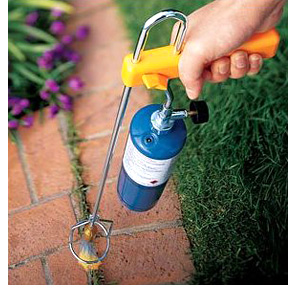
A weed burner would be a more correct description. However a weed burner is indeed a faithful reproduction in miniature of the very same notorious device once deployed by marines to toast stubborn hole hugging Hirohito-ites in the Pacific.

But the trouble with a retired man of a certain age having a flame thrower at hand is that he’s likely to start trying it out for uses other than that which is proscribed. Perhaps he’ll have a go at a wasps nest with it, or go after mice. He also needs to know that while a weed burner is a more eco friendly way of going after weeds on footpaths and walking areas than toxic chemicals, they should not be used on growing soil because they also kill the organisms which help it do its thing.


Flamethrowers - not suited for garden work

For much of the year, weeding is one of the home food grower’s main duties. Inevitably they grow faster than your crops especially if the crops happen to be carrots. Carrot growers in particular will find that because of the need for a finer tilled soil, their neat lines of seedlings soon disappear amongst a amongst a forest which appears to include every specimen in the book. I spent an hour picking my way through one carrot bed last year, removing the tallest weeds first, chickweed last, before finally determining that there weren’t actually any carrots left in there at all.


A weed burner as bought on Amazon - not the same thing

By way of making weeding easier and by way of giving the amateur grower a grounding in identification of what others fondly term “wild flowers,” every year in July, at the peak of the weed season, the Organic Centre in Rosniver, County Leitrim offers a course a course in weed identification and study given by leading horticulturalist Ingrid Foley. To give us a taster of what my dad might be applying his flamethrower to,  I’ve asked her to give the low down on fsome of the most stubborn specimens out there.


Really Digging the weeds - that's Ingrid on the right (Sligo IT)
“While we might hate weeds, they absolutely love us,” says Foley. Experts believe that some weeds have actually evolved ways of getting humans to help in their regeneration. “Weeds employ a number of devious and clever devices to harness people and animals in order to reproduce.”

And this is what you need a flamethrower for because bittercress sets its very own IEDs. Brush past a ripe bittercress and it literally explodes, hurtling hundreds of tiny seeds all over your plot. Other ingenious weeds include the ubiquitous Cleavers, otherwise known as Galium Aparine, or more popularly here in Ireland as the “stickyback.” This hitches a lift on humans or animals in order to spread its seeds. The plant is covered in microscopic hooks which fasten to our clothes, break loose and “hitch” until the hooks slacken and the seeds/segments drop off elsewhere. Other plants like the Red Dead Nettle trick insects into carrying their seeds away.

“Then there’s the airborne invaders like dandelion and thistles which generate seedheads made up of hundreds of tiny parachutes enabling them to glide off to new ground.” Finally let's not forget the sneaky “creepers” in the long grass which send out “runners” that can span across  a vegetable bed within a few short weeks.

So in the interests of providing humanity with the necessary intelligence to claw back some growing ground from the dastardly ones - here's Ingrid's field combat guide to warfare with the garden baddies:

Chickweed
Thus called because we feed it to chickens. We can also feed it to ourselves because it’s edible for humans and contains a remarkably high amount of nutrients and minerals including potassium, riboflavins, magnesium, beta carotene and it’s especially high in iron. Unfortunately that’s because it’s depleting all this good stuff directly from your soil.

Light green in colour, it spreads at ground level in dense mats and contains a little white flower which five white petals. You can identify it as chickweed if the five are divided by little black lines to give the appearance of ten petals. Chickweed goes to “sleep” at night when it folds it bigger leaves over the emerging tender shoots to protect them from colder tempeatures.

It tends to develop in a great big tangle, it breaks off easily and is therefore tremendously difficult to uproot. Not only will it spread like lightning but it’s also “ephemeral” which means it’s one of those annuals which can go through its reproductive cycle a number of times in the season. “Chickweed can produce 2,500 seeds per plant and move from seed to maturity within two months or so. So you can see why its necessary to keep them down.”


Chickweed yesterday

The best method unfortunately is to just keep pulling out those chickweed nests. Some people put them in the juicer to tap those minerals for themselves. But don‘t try to eat your way out of a chickweed infestation - it was once used to relieve constipation so you‘ll spend more time you know where than weeding. Chickweed is one of those weeds which can be used in compost (before it seeds) to get those minerals back into your soil again.


Scutch grass in the early 19th Century (no cameras then)


Scutch Grass/Couch Grass
Deployed on golf courses and once used to stuff mattresses and upholstery (hence the couch bit), scutch is the long distance runner of the weed world. It establishes itself not only by seed but by laying its stalk out along the ground and setting out little rootballs from each little “elbow” along the shoot. In this way, a single stalk of skutch can establish four plants along a one foot line in less than a week. Unfortunately there’s no easy way of getting it out other than rake out every little bit you find. Watch when you’re strimming, even apparently yellow and dry segments can suddenly reroot and form a scutch plantation. Absolutely do not use a rotivator if you have a scutch problem and Ingrid Foley says, do not let it within a hare’s breath of your compost heap or bin.


There's no Dock holiday at my allotment


Dock
Docks are the bane of my life on Plot 34, where a dock spikes up in almost every fresh bed I dig. These sprout from the hundreds of seeds which the parent plant produces on its “spike” heads. Dock seeds tend to pop up on certain types of ground - usually freshly cleared ground like on a relatively new allotment complex.
The seedlings are not very competitive and are easily snuffed out in grasslands by competing plants. Unfortunately they have a secret weapon - extended suspended animation. They can go to “sleep” and bide their time in the soil for more than 50 years until some eager food growing newbie clears the carpet above and stirs the whole lot from suspended animation.

Once the plant establishes its “tap root” it’s almost impossible to remove and those who have broken the eco code by spraying or injecting them with high powered poisons will note that the dock will waver but will always recover. “I don’t think I’ve ever got the bottom of a dock tap root,” says Ingrid. “This is unfortunate because like a dandelion, they can grow back again. The common types in Ireland are the regular flat leaf (rumex obtusifolius L.) and curly dock (numex crispus). “All you can do is keep cutting off that shoot head again and again to try and deplete the tap root. However someone told me on one of their courses that they dug out a tap root and nailed it to a door where it dried out completely. The thing somehow managed to sprout again.” And they’re everywhere… until that is, you get a nettle sting.


Suspended animation - some weeds can do this even without 1950's scientists

The hairy bittercress
The rather harmless looking hairy bittercress, a common garden weed, has an explosive secret. The bittercress is a booby trap primed by mother nature to be detonated by unsuspecting vegetable growers - just one of many clever and diverse aids to reproduction that weeds deploy in our gardens.
Touching or brushing off ripe bittercress causes the seed pods to literally explode and scatters its payload of 300 seeds per pod to a distance of a metre in all directions.
As an “ephemeral” it’s also fast maturing and can produce seven generations in one growing season. Multiply this by 300 per flower/pod on each plant and you’ll quickly realise why this edible baddie is so hard to eradicate from your plot. The flat rosette shape of the plant even gives it the appearance that it has already “exploded.”


Hairy explosions from the bittercress

It looks like a green rosette or star spread out flat on the ground. It’s stems have individual rounded and succulent-like leaves which reduce in size as they move out towards the tips. The flowers which form at the end of stalks have four white petals. The trick is to get them in spring before detonation. You can eat the younger plants in salads just like watercress.

Shepherd’s Purse
Named after its heart shaped seed pods which are covered in a gummy oil which enables them to stick to clothes and fur. Another ephemeral which can reproduce many times in a season, it has a spray of long narrow jagged harpoon  shaped leaves from a central stem and it sends up long flower stalks with four petalled white flowers on all sides. It was used in WW1’s trenches as a styptic to stem blood flow from wounds and also has astringent qualities to shore up diahorrhea.


Some sticky shepherd's purse yesterday
“With Shepherd’s Purse and Cleavers you can actively bring weeds into your own garden by walking around someone else’s,” says Foley. “This is particularly prone to happen in an allotment complex where people are in and out of their neighbours plots.” Pull it out before it flowers.

Red Dead Nettle
Easy to identify because of its small purple orchid like flowers which poke out randomly from around little upright columns of  spade shaped green leaves. These are thick and wrinkled with a purplish tinge to the top. A single isolated plant can produce 27,634 seeds and it has two other secret weapons. The first is the ability of its seeds to go into suspended animation or dormancy.


Purple hazard - the red dead nettle - not red at all!

This can last five years and in some cases, there have been instances recorded of 30 year old seeds germinating. The second secret weapon is the plant’s symbiotic relationship with the ants. The seeds are coated in a residue which ants feed to their larvae. So ants carry the seeds into their nests and when the seeds have been sucked dry they’re taken to the nest’s “rubbish area” which is rich in nutrients from dead ants and discarded matter.

The Dandelion
Every part of the dandelion is edible although young leaves taste best. Their medicinal use in times past as diuretics to aid liver and kidney complaints has led to the myth among children that contact with them causes you to wet the bed. They come with harpoon shaped leaves, and the distinctive yellow heads are actually a multitude of tiny flowers bunched together. Each turns into a little “parachute” with a feather like canopy which travels on the wind causing a massive spread of seeds which will sprout from a crack in a wall.


(yes I know...)
It’s not enough that 93 species of insect are drawn to them for nectar and pollinate them, the Taraxacum also has the ability to “clone” itself by reproducing asexually just in case. In loose soil, a slow steady pull can sometimes get the entire root up. Otherwise use a “rooter” tool, a sort of metal stick with a sharpened and slightly elevated groove at the end. Chopping the root into parts can cause each part to regrow as a brand new plant.

Creeping Buttercup
With maple shaped green leaves, the creeping buttercup has a huge armoury of assault weaponry including the rapid spread by runner for which is it famous - a sly creeping motion whereby it creates new plants along its spreading arms. It has mass coverage and Rumple Stiltskin level dormancy in its arsenal (80 year old seeds have been recorded to germinate while 12,000 seeds have been recorded in one metre square), animal travel (it’s eaten and excreted by worms, birds and rodents), indestructibility (it survives deep burial and heavy trampling). But most sneaky of all it deploys its own chemical warfare on rival plants- which include your crops.

This dastardly creeper releases substances (allelopaths) which slow their growth. So despite the girly monicker which might suggest butter wouldn’t melt in its mouth, this delicate cup is overflowing with poison. It is a true herbicidal maniac! 


How Dr Interweb and Captain Youtube Saved the (Gardening) Universe

You know you're old when the title years of your favourite childhood sci fi features have already come to pass. Here in 2011, mine are long past. The comic 2000ad (Judge Dredd) and the Gerry Anderson tv series Space 1999 were my particular childhood staples while Kubrick's 2001 also made a big impression on the then mini me. 

Back in the late seventies I lived in the assured belief that even the most dynamic starship crew were hamstrung without their all knowing talking computer. This electronic oracle was then characterised either by panel of lights that flashed to the tones of its soothing and patrician electronic vox, or (if the production budget were low on that tv series) a mysterious monotone voice which emanated from some vague space overhead  - the crew addressed it by looking vaguely overhead as they voiced their queries. 

But whatever the mode, the talking computer had the right answer or solution to save the crew and ship from each and every crisis. Orac from Blake's Seven or Holly from Red Dwarf kept them on the straight and narrow while Hal from 2001 showed what happened if you ticked them off with too many stupid questions.

The crew from Space 1999 listens intently to the computer's fashion instructions (flares did return about 1999)
What's this got to do with food growing? I hear you ask as you look vaguely overhead. Well the point is that much of our childhood sci fi has already come to pass even without us realising. Skype is the visual phone call. Robots are already everywhere - and while they can't serve you breakfast in bed they can mow your lawn - robot lawnmowers are already making their debut (see below).

While you might have to key in your queries via keyboard rather than spout them out to to him while peering above into a vague space overhead, the great Dr Interweb clearly is the obvious manifestation of sci-fi's talking computer - with Captain Youtube as his trusty ally.

Skypeing the wife in the retrofuture
In fact, forget the spade or the trowel because Dr Interweb is the modern food grower's most useful tool. Through my five years growing food, I'd have been lost many time over were it not for the great all knowing sage and his vast soup of collective knowledge.  Ask a question (properly) and usually the all knowing Dr Interweb will reveal all - whether that be how to cross pollinate chillies indoors or to how to brew a mean compost tea.

Science fiction wrong: Robots still can't serve up the dinner
Through the vast netscape of interweb land there are blogs, chatrooms, forums, instructional websites, university sites, commercial sites and more all of which allow you access to a world of food growing knowledge.

(OK.... now if I sound way too impressed by all this, it's because when I started working I had a typewriter to write on and a phone with a dial that required the butt end of a pencil to make a phone call and a few seconds of patience after number to wait for the dial to roll back again.)

Despite the biggest criticism of the internet - it's vast universe of useless info -  sometimes the most seemingly useless and flippant information is the best. For example, a post from a guy called Jmaxx taught me why my chillies weren't cropping indoors. The office worker somewhere in the USA accidentally grew a chilli plant by dumping his lunch into a nearby pot plant and then worked out how to pollinate it using a paper clip. He caused me remember the obvious - that there were no bees, or "bugs" as he called them, to pollinate the flowers. At the other end of the scale are the up to date research presentations from departments of universities worldwide - theses, studies and research findings for all so read and benefit from. In the middle is all the rest.

My own personal favourite internet realm is Youtube, the video and clip share website founded less than a decade ago by three former Paypal employees who then made $1.65bn when they sold it to Google after just three years.

Science fiction right: Lawnbott
Youtube is unmatched for teaching you some of the trickier gardening tasks  -  as demonstrated on screen by someone else in the know.  Often these people are experts in their fields, sometimes they are not...but often that just adds to the fun. Youtube means access to private tutorials from a worldwide staffroom of tutors and professors of the university of horticulture and food growing life generally. And if you miss a bit of the demo/tutorial, you just play it right back again.

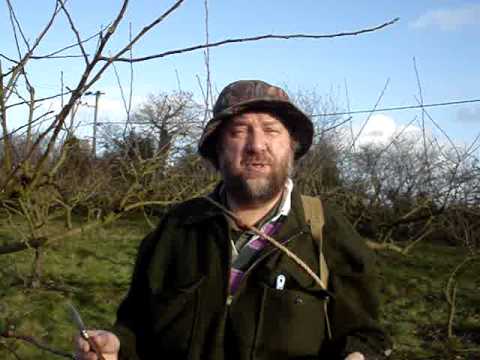
Whilst trying to find out how to prune apple trees, I realised that all my reading up and studying diagrams still didn't make me feel confident enough to give it a go. However, on searching “apples” and “pruning” on YouTube,  I located a step by step film made by Fruit Wise Heritage Apples in the UK who keep an orchard with 800 different trees. One of its growers, Stephen Hayes took me step by step through the process, explaining everything in minute detail. It was as if he, the apple grower of fifteen years experience, had given me my own personal tutorial, showing me exactly what to do. And it is this, the “showing” of how it’s done, where YouTube is unmatched.

Stephen Hayes, the apple tree sage of Youtube
Sometimes the experts can be household television names because often entire programmes from mainstream tv are commonly posted on Youtube.

When I wanted to learn about the great urban agricultural revolution which has taken place in Havana, Cuba, I was delighted to find Monty Don to show me around that elegant city and relate how it recovered from near starvation after the Soviet departure, to feeding 90% of the city’s population soley with food grown in small urban allotments, public spaces, even paint tins on balconies.

Who better than the Don and his infectious enthusiasm, to escort us through the city’s organiponicos, the raised bed urban allotments which now feed well over a million people in a miracle which will surely impact on the rest of the world as we approach peak oil.
Monty Don takes us around the world of food growing on Youtube

Youtube still bears much of that rag tag spontaneity which made surfing the internet so much fun to surf in its earlier years - before the corporations got stuck in to channel surfers away from those home produced web sites which made the net so much fun in the first place.

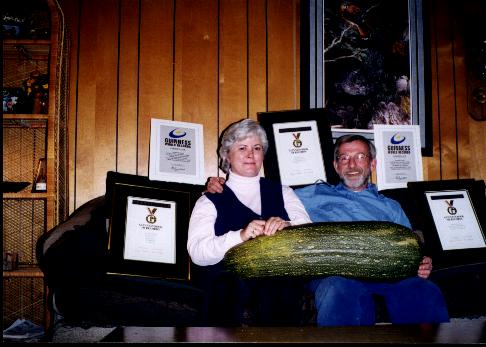
Some years ago I met John Evans, holder of no less that eight Guinness World records for giant veg  - after I happened across his amazing clips on Youtube. I found his location on the net, I phoned him and was delighted to be invited down to see his garden in West Cork. He had moved back to Ireland after spending most of his life in Alaska. John's eye opening clips include a tour of his former giant vegetable garden in Alaska. Watch him wander in and out amongst the 35 lb cabbages and 45 lb celeries. The garden's not there any more but you can still tour it on Youtube. Take a look, you'll be gobsmacked at what's possible.

John’s secret is his own brand of compost tea, called Bountea which he sells online. He told me how to make my own using compost, soil, an acquarium aerator and molasses. Aerating the diluted mixture multiplies the “good” bacteria in the compost a thousandfold. I used Youtube to research it further. Thanks to Patti Moreno, the Garden Girl and her chat with the “organic mechanic” who showed me how to put it all together using vermicompost as the key ingredient. Find this clip by searching “worm poop tea.”

John Evans, his wife and a giant courgette
Also note her cat drinking out of the bubbling bucket in the background as she delivers to camera.

And here too is added enjoyment withYoutube. Thanks to its endless troops of amateur experts eager to share their knowledge and often using nothing more than a mobile phone camera to record a clip for posting, there are some truly unexpected hilarious moments to be found.

Cassandra, a rather portly mom from Arizona explains how to grow potatoes in a bin to a wobbly camera operated, it emerges, by her bored young son. As Cassandra earnestly details how to line the bin and how to arrange the potatoes, she is unaware that her pressganged cameraman is sticking his fingers in the lens to make it appear that a giant hand is prodding his mother in the behind from on high as he she busies herself chattering and lining the bin.

-         “....With such high humidity here in Arizona, I’m always concerned about my dirt drying out in the potato bin...hey, are you paying attention?”
-         “Yes mom.”

Also delightful are the clips posted by Frank Cook, an American crusty/hippie with dreadlocks and a wooly cap who was attached to the eatweeds.co.uk website. Frank had his cockney camera crew cracking up as he attempted, in his deadpan mother-earthspeak style, to persuade people to eat dock leaves and other weeds commonly found in urban location. In another clip, he wows us with the qualities of wild blackcurrants and there is a truly classic moment when he turns to the camera and tells us that the blackcurrant plants are “giving us a signal to” (here he punctuates the air by flashing two peace signs, one with each hand)  “pay attention.”

The late great Frank Cook - still imparting his good vibes on Youtube
Cook has taught me plenty of really useful things, not least that blackcurrants will do quite well in the shade. Thanks to Frank I've made a particularly dark corner of my garden productive for something other than slug attracting hostas and dark green ivy.

Sadly Cook passed away in 2009 although I only found out today.

I have to confess to having felt the sort of twinge of sadness that accompanies the passing of someone you've actually met. This says something not only about Frank's obvious charisma but also the intimate nature of Youtube through which you sometimes feel you almost know those tutors you encounter there. Another great quality of Youtube and the internet overall is it's ability to store that sort of personality and knowledge for years to come. Frank may have passed on years ago but today in cyberspace he's still alive and teaching.

Then are the show offs and the allotment exhibitionists. You can use Youtube to show off. But when the show offs post their allotments, you can then go poking around in their plots with a screen and keyboards (remember when I started work I had a typewriter). The truly great allotments instil envy while those who show off their failings reassure us that we GIYers are not perfect and we all have the same problems. 

After taking a virtual tour of George’s allotment in Liverpool (open Youtube and search “raised bed allotment summer 2008) I felt intense pangs of jealously stab in over his meticulously structured food garden which is only a year older than mine.

Perfect allotments on Youtube make me jealous
Liverpool George (who you never see as he’s carrying the camera) does demonstrate, as you accompany him by camera around his patch, just how many varieties of food plants you can grow, as well as the sheer amount of it -  in a relatively small space.  The tour does however lead you to wonder if George is something of a compulsive carpenter – most of his plants grow in expertly put together raised beds, compartments, wood framed cages and timbered mini greenhouses.

Amateurs like Cassandra and George who have no axe to grind or nothing to sell us will become even more important to us knowledge seekers in the years ahead as the better known names in gardening exercise copyright and remove their contributions and clips from Youtube just as so many music stars and tv stations are now starting to do with copyrighted work.

"Just keep talking like you were just there..."   no fogies, no fuss just a phone
Perhaps the real wonder is that any one of us can become tutors at the university of Youtube or other clip sites - all we need is a mobile phone with a video record and a computer on which to download our wisdom.
And who knows, when I finally get around to using the video option on my new camera, or linking my phone up to the computer, I might even stick Plot 34 up there ...if my nine year old self appointed Head of Secret Tunnels promises to keep his fingers out of the lens that is....